




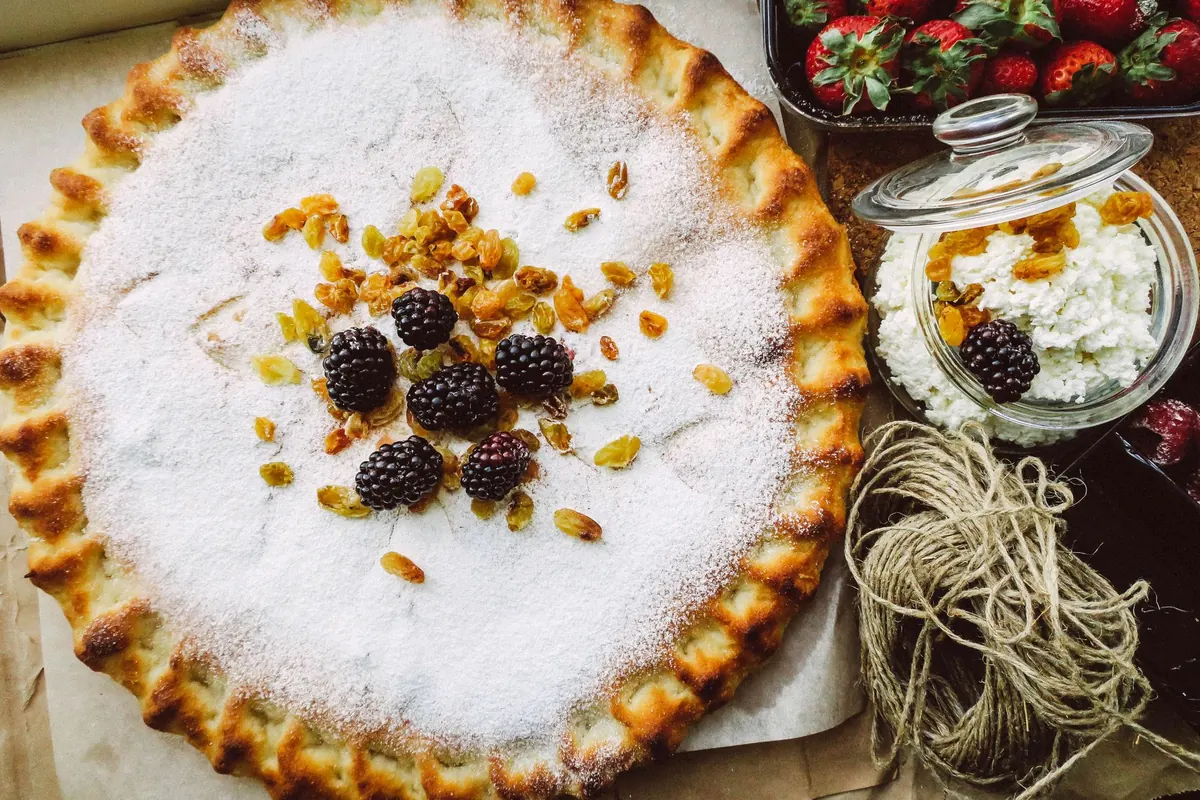
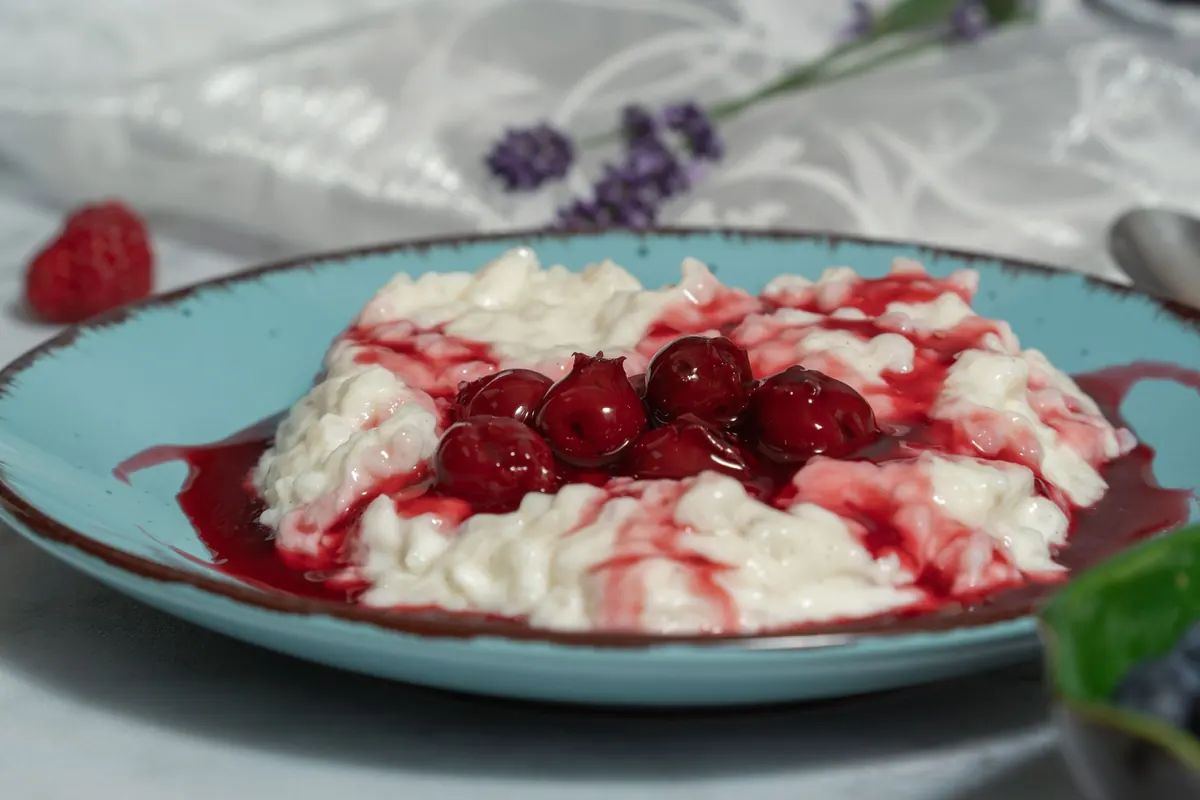
Put a bowl of rice pudding beside a square of bread pudding and the family resemblance is obvious: milk, sugar, starch, and a spoon. Then you take a bite, and the two part ways completely. Rice pudding is creamy and spoonable, with grains you can still feel. Bread pudding is set and sliceable, a soft custard holding cubes of bread together under a browned top. Both are excellent. They are simply built for different moods, different pans, and different occasions.
What Each Pudding Actually Is
Rice pudding starts with rice simmered in milk or cream until the grains soften and their starch thickens the liquid around them. The result is somewhere between a porridge and a sauce — loose enough to eat with a spoon, thick enough to coat it. Versions range from an eggless stovetop pot stirred on a Tuesday night to a baked dish finished with nutmeg and a browned skin.
Bread pudding starts with bread, ideally a little stale, soaked in an egg-and-milk custard and baked until the custard just sets. The bread is the structure. Cubes hold their shape at the edges and go soft in the middle, so you get a dessert you can cut into portions instead of ladle out.
The quick comparison:
- Starch: rice grains vs. cubes of bread
- Thickening: rice starch alone, or rice starch plus egg custard
- Method: simmered on the stovetop or baked in a dish
- Texture: loose and creamy vs. firm and sliceable
- Serve: a bowl, warm or chilled, vs. a warm square with sauce
The Custard Base: Optional in One, Essential in the Other
This is the real dividing line. Classic bread pudding is a custard, so eggs are non-negotiable. A workable starting point is one egg per cup of milk or cream, with about a quarter cup of sugar per cup of liquid, plus a pinch of salt and a little melted butter or vanilla. Scale it up or down from there depending on how rich you want it. The custard should taste slightly sweet and a touch under-seasoned before baking, because the bread will absorb and dilute it.
Rice pudding can go either direction. The stovetop, egg-free version relies entirely on rice starch, which makes it looser, more delicate, and closer to a sweet porridge — and also more forgiving, since there's no custard to curdle. The baked version adds eggs and lands much nearer to a custard, with a firmer set and a skin on top. If you like the idea of rice pudding but want it sliceable, bake it. If you want comfort in a bowl, keep it on the stove.
Texture: Grains in Cream vs. a Set Custard
With rice pudding, the rice variety does most of the work. Short and medium grains — Arborio, pudding rice, bomba, even jasmine in a pinch — release starch and give you that silky body. Long-grain rice stays separate and produces something thinner and more distinct, which some people prefer and others find disappointingly soupy. A general starting ratio for stovetop cooking is one part rice to four or five parts milk, adjusted as it thickens. Add sugar after the grains have started to soften; sugar early on can slow that process down.
With bread pudding, the bread is the variable. Lean, dry, sturdy loaves — day-old baguette, country sourdough, challah left out overnight — absorb custard without collapsing. Soft sandwich bread turns to paste. Brioche and croissants are delicious but buttery and rich, so the finished pudding is more soufflé-like and less structured; reduce the added butter if you use them. Slightly stale or lightly toasted bread is the single biggest upgrade you can make.
Flavor: Delicate and Spiced vs. Deep and Caramelized
Rice pudding is a quiet canvas. Vanilla, cinnamon, nutmeg, cardamom, saffron, citrus zest, raisins, toasted pistachios, coconut, a swirl of jam, a spoonful of condensed milk — the flavors sit alongside the dairy rather than competing with it. Kheer, arroz con leche, and Scandinavian rice desserts all follow that same logic.
Bread pudding has more built-in character because toasted bread brings a malty, faintly caramel note. That means it stands up to bolder additions: bourbon or rum in the custard, chocolate chunks, apple and cinnamon, pumpkin, berries, orange zest, caramel or lemon sauce poured over the top.
Serving Style and Occasion
Rice pudding goes in bowls. Serve it warm with a dusting of cinnamon, or chill it and thin it with a splash of milk when you reheat, since it firms considerably in the fridge. It suits small batches, quiet evenings, and anyone who needs a naturally gluten-free dessert — just check your other ingredients.
Bread pudding is a pan dessert. It feeds a crowd from a 9-by-13 dish, cuts into squares, and begs for sauce: whiskey sauce, crème anglaise, caramel, or a simple lemon glaze, plus a scoop of vanilla ice cream if you're feeling generous. It travels well to potlucks and holds up to reheating in a low oven.
How to Choose
- You want something spoonable and cozy tonight: rice pudding, stovetop, no eggs.
- You have half a loaf going stale: bread pudding, every time.
- You need a gluten-free dessert: rice pudding is the simpler route.
- You're feeding eight people: bread pudding in a single baking dish.
- You want it make-ahead: both work; rice pudding chills beautifully, and bread pudding can be assembled and refrigerated for a few hours before baking.
- You want sauce and drama: bread pudding, no question.
Tips That Apply to Both
- Use a heavy-bottomed saucepan for stovetop rice pudding and stir often near the end; milk scorches quickly over high heat.
- Bake custard-based puddings in a water bath at a moderate oven, and pull them when the center still wobbles slightly. Overbaked custard weeps liquid.
- Let either pudding rest ten to fifteen minutes before serving so the texture settles.
- Cool leftovers promptly, refrigerate them, and reheat until hot. Cooked rice in particular shouldn't sit at room temperature for long stretches.
- Both are rich in dairy and sugar. If you're managing blood sugar, cholesterol, or a dairy intolerance, a doctor or dietitian is the right person to ask about adjustments.
The Short Version
Rice pudding is a creamy, spoonable, starch-thickened comfort food that can be made with or without eggs and takes kindly to warm spices. Bread pudding is a baked egg custard built around stale bread, cut into squares and usually dressed with sauce. Choose rice pudding when you want something soft, delicate, and gluten-free; choose bread pudding when you want structure, a crowd-sized pan, and something to pour over the top. Both reward patience more than precision — stir the pot, don't overbake the custard, and taste as you go.
Photo: Gundula Vogel / Pexels